
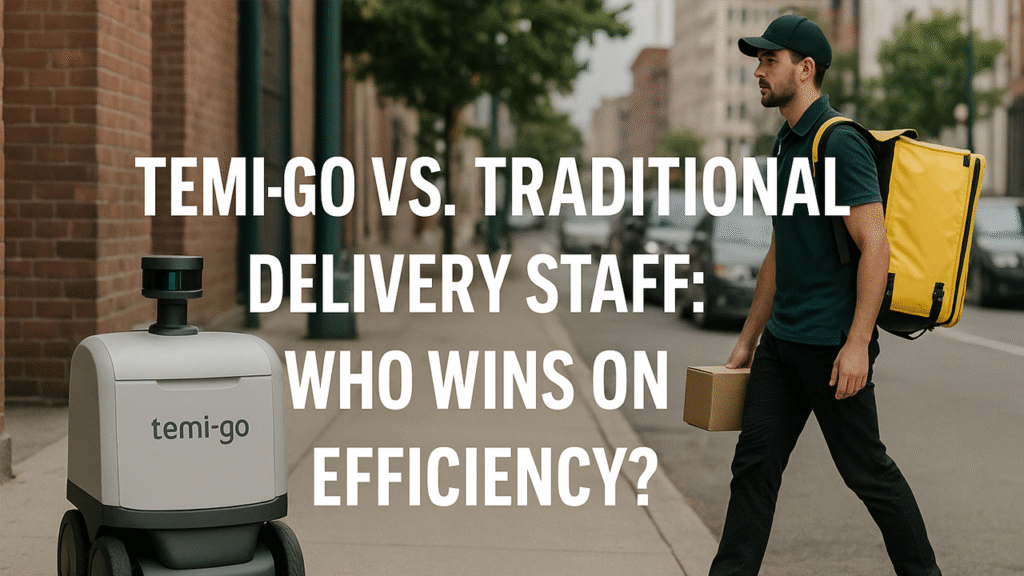
Temi-Go vs. Traditional Delivery Staff: Who Wins on Efficiency?
The hospitality and healthcare industries are experiencing a quiet revolution. As businesses grapple with staffing challenges, rising labor costs, and the demand for faster service, autonomous delivery robots like the Temi-Go are stepping in to complement traditional delivery staff. But how do these robotic assistants truly stack up against human workers when it comes to efficiency?
In this comprehensive analysis, we’ll examine the real-world performance metrics, cost implications, and operational advantages of both approaches to help you determine the best solution for your business.
The Efficiency Battleground: Key Metrics That Matter
When evaluating efficiency in delivery operations, several critical factors come into play. Traditional staff bring human intelligence, adaptability, and interpersonal skills to the table. Meanwhile, robots like the Temi-Go offer consistency, tireless operation, and precision navigation.
Speed and Consistency
Traditional delivery staff can navigate complex environments with ease and adjust to unexpected situations instantly. They can take stairs, operate elevators with ease, and handle fragile items with care. However, human workers also experience fatigue, require breaks, and may vary in performance throughout their shift.
The Temi-Go autonomous delivery robot operates with remarkable consistency. It maintains the same pace throughout an entire shift without breaks, delivering items at predictable intervals. In hotel environments, studies have shown that autonomous robots can complete up to 40 deliveries per shift compared to a staff member who might manage 25-30 deliveries while juggling other responsibilities.
Labor Cost Analysis
The financial comparison reveals an interesting picture. A full-time delivery staff member in the UK typically costs between £22,000 to £28,000 annually when factoring in wages, national insurance, benefits, and training. Additional costs include uniform provisions, staff rooms, and management overhead.
The Temi-Go represents a different cost model entirely. With rental options starting from manageable monthly fees and minimal maintenance requirements, the robot can operate around the clock without overtime pay, holiday entitlement, or sick leave. Over a three-year period, businesses often see cost savings of 40-60% compared to equivalent human staffing coverage.
Operational Availability
Perhaps the most significant efficiency advantage of robotic delivery lies in availability. Traditional staff work in shifts, require holidays, and may call in sick. Coverage gaps often necessitate hiring additional part-time workers or burdening existing team members.
The Temi-Go operates whenever needed, requiring only periodic charging. In 24-hour facilities like hospitals or hotels, a single robot can provide continuous coverage that would otherwise require three or more human staff members working rotating shifts. This translates to genuine round-the-clock service without scheduling complications.
Real-World Performance Scenarios
Hotels and Hospitality
In hotel environments, the Temi-Go excels at routine deliveries such as towels, toiletries, and room service items. Guests often find the novelty engaging, taking photos and sharing their experience on social media, which provides additional marketing value.
However, traditional staff remain essential for complex guest interactions, handling complaints, and providing personalized service that builds guest loyalty. The most efficient hotels deploy a hybrid model where robots handle high-volume, repetitive deliveries while staff focus on high-value guest experiences.
Healthcare Facilities
Hospitals and care homes present unique efficiency challenges. Medications, lab samples, and meals require timely delivery across sprawling campuses. The Temi-Go can navigate hospital corridors autonomously, reducing the burden on nursing staff who can then dedicate more time to patient care.
Traditional delivery staff in healthcare settings provide crucial human oversight for sensitive deliveries and can respond to urgent situations with judgment that robots cannot yet replicate. The efficiency gain comes not from replacement but from allowing skilled healthcare workers to focus on clinical responsibilities rather than transport tasks.
Corporate and Office Environments
Modern office buildings are increasingly deploying delivery robots for mail distribution, catering services, and supply deliveries. The Temi-Go integrates seamlessly with building management systems, using elevators independently and navigating multi-floor environments efficiently.
Traditional mailroom staff bring organizational knowledge and can handle complex sorting, forwarding decisions, and special handling requirements that require human judgment. The efficiency sweet spot involves robots managing routine, scheduled deliveries while staff oversee operations and handle exceptions.
The Intangible Factors: What Numbers Don’t Capture
Efficiency measurements typically focus on quantifiable metrics, but several intangible factors influence the real-world effectiveness of both solutions.
Customer experience varies significantly. Some guests and patients find robots delightful and futuristic, enhancing their overall impression of your facility. Others prefer human interaction and may feel that automated service diminishes personal attention. Understanding your specific audience demographics is crucial.
Staff morale represents another consideration. When robots are introduced thoughtfully as tools that reduce tedious tasks, employees often embrace them. Conversely, poor communication about robotic implementation can create anxiety about job security, reducing overall operational efficiency through decreased morale.
Brand positioning matters too. Organizations promoting innovation and technology leadership find that visible robot deployments reinforce their market positioning. Traditional service-focused brands may prefer to maintain human touchpoints as a differentiator.
Hybrid Models: The Winning Strategy
The most efficient operations rarely choose between robots and humans. Instead, they strategically deploy both to maximize their respective strengths.
A typical hybrid approach might include Temi-Go robots handling high-frequency, predictable deliveries during peak periods and overnight shifts. Traditional staff oversee operations, handle complex requests, provide personalized service, and manage exceptions that require human judgment.
This model achieves efficiency gains of 30-50% compared to human-only operations while maintaining service quality and flexibility. Staff satisfaction often increases because employees spend less time on repetitive transport tasks and more time on engaging, value-added activities.
Making the Decision: Is Temi-Go Right for Your Operation?
Several factors should guide your efficiency evaluation. Consider your delivery volume first. Operations with more than 20 deliveries daily typically see faster return on investment from robotic solutions.
Environmental factors matter significantly. Facilities with multiple floors, long corridors, and predictable layouts favor robotic deployment. Spaces with frequent layout changes, stairs, or very tight corners may limit robot effectiveness.
Your labor market conditions play a crucial role. Areas experiencing recruitment challenges or high staff turnover often find robotic solutions provide stability and consistency that’s difficult to achieve through traditional hiring alone.
Expert Implementation Support
Successfully integrating autonomous delivery robots requires expertise in robotics deployment, staff training, and operational optimization. Many organizations struggle with the technical and logistical challenges of implementation without proper guidance.
This is where professional robot consulting makes the difference. Expert consultants can assess your specific environment, identify optimal deployment strategies, and ensure seamless integration with existing operations. They provide staff training, troubleshooting support, and ongoing optimization to maximize your efficiency gains.
Need specialized talent to manage your robotic operations? Professional robot recruitment services connect you with qualified personnel who understand autonomous systems, can oversee daily operations, and drive continuous improvement.
Take the Next Step Toward Operational Efficiency
The efficiency debate between Temi-Go and traditional delivery staff doesn’t have a universal winner. The true victory comes from strategically combining both approaches to create optimized operations tailored to your unique needs.
Ready to explore how autonomous delivery robots can transform your efficiency?
Contact our specialist team:
- Email: SALES@ROBOTSOFLONDON.CO.UK
- Phone: 0845 528 0404
Our consultants will assess your operations, provide customized recommendations, and support you through every stage of implementation. From initial consultation through staff training and ongoing optimization, we ensure you achieve maximum efficiency gains.
About This Article’s Sponsors
This article is brought to you by leading robotics specialists dedicated to making advanced automation accessible and effective:
Robot Center – Your destination for robot purchasing, comprehensive robot consultancy, and robotics advisory services. Expert guidance for organizations ready to invest in permanent robotic solutions.
Robots of London – Specialists in robot hire and rental services for events, temporary deployments, and trial periods. Experience cutting-edge robotics without long-term commitment through flexible rental options.
Robot Philosophy (RoboPhil) – Founded by Philip English, a leading robot YouTuber, influencer, and consultant. Providing robot consultancy, recruitment services, expert advice, and insights from years of hands-on robotics experience. Follow RoboPhil for cutting-edge robotics content, training resources, and industry thought leadership.
The future of efficient operations isn’t about choosing between humans and robots—it’s about strategically combining both to create service excellence that neither could achieve alone.
https://www.youtube.com/watch?v=rj-FdG_j4rY